Lobito Corridor as a PPP Model to Unlock Private Rail Investment

Lobito Corridor as a PPP Model to Unlock Private Rail Investment
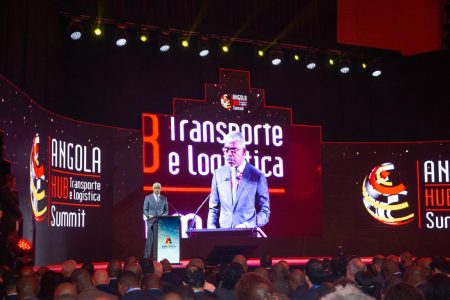
Ricardo Viegas D’Abreu, Angola’s Minister of Transport. Photo credit: © Railways Africa // Craig Dean

At the Luanda Finance Summit, which took place last year, Angola’s Minister of Transport, Ricardo Viegas D’Abreu, set the scene for a panel discussion that examined how governments, development finance institutions and private investors can converge around a continental financing compact to transform fragmented rail projects into an integrated, bankable network capable of advancing AfCFTA-driven trade. In doing so, he highlighted the Lobito Corridor as a PPP-based model to unlock private rail investment and attract private capital into Africa’s rail infrastructure.

He noted that Africa’s population is growing rapidly and that by 2050, the continent will be the second most populous in the world. Despite this growth, Africa’s rail network today remains just over 50,000 kilometres, fragmented and largely non-integrated, with limited high-speed rail outside parts of North Africa. By comparison, Europe’s rail network is four times larger, while countries such as China and the United States have developed extensive rail systems that play a central role in economic and territorial development.

Lobito Corridor as a PPP Model to Unlock Private Rail Investment
Ricardo Viegas D’Abreu, Angola’s Minister of Transport. Photo credit: © Railways Africa // Craig Dean

Against this backdrop, he stressed the need for bold approaches to infrastructure financing, recalling that one of Angola’s earliest public-private partnerships was established more than a century ago through the Lobito Corridor itself. He questioned how bankable such a project would have appeared 125 years ago and highlighted that, while technology has significantly reduced construction timelines, delays between project approval and implementation remain a major obstacle.

According to Angola’s transport, logistics and road infrastructure master plan, approximately 2.5 percent of the country’s GDP needs to be invested in transport and logistics infrastructure over the next 25 years. This level of investment cannot be achieved through public funding alone and requires substantial private sector participation.

Using the Lobito Corridor as a case study, he explained that Angola initiated the reactivation of the corridor in 2019. However, it took five years to reach the point where the concessionaire could assume full responsibility for management, operations and maintenance. He observed that a five-year timeframe coincides with a single legislative term in many constitutional democracies, adding a further layer of political complexity to long-term infrastructure delivery.

The concession has also stimulated interest in extending the corridor through a greenfield rail link to Zambia. This proposed 730-kilometre connection, estimated at USD 4.5 billion, is structured around full private sector participation.

Questions around project bankability often pose challenges, underscoring the need for African financial institutions to play a more active role in ensuring such projects reach implementation. In the case of the Angola–Zambia link, for example, while traffic volumes between the two countries appear modest, these figures fail to capture the broader economic impact of improved connectivity, reduced logistics costs and regional trade integration. He suggested that assessments of bankability need to adopt a more holistic view that reflects long-term development benefits, drawing a parallel with challenges faced in implementing the Single African Air Transport Market.

Looking ahead, he confirmed that Angola, with support from the World Bank, is developing a master plan for the Lobito Corridor. This includes the establishment of a corporate entity to drive investment along the corridor, promote industrial development, support job creation and stimulate wider economic activity.

Related News Articles