SADC Regional Ports Confirm Participation in Land-Linked Zambia 2026

SADC Regional Ports Confirm Participation in Land-Linked Zambia 2026

Land-linked Zambia (LLZ) 2026 is fast approaching, with all six key SADC ports confirming participation, namely Beira, Dar es Salaam, Durban (Transnet), Lobito, Nacala, and Walvis Bay, highlighting the importance of strengthening multimodal corridors, improving efficiency, and enhancing connectivity between SADC and international markets.

With the Zambian government targeting the production of 3 million MT of copper by 2031, these ports will not only feel the weight and responsibility of this target, but also the need to advance their technologies along the corridors as they continue to serve as gateways for imports and drivers of regional integration and industrialisation.

As Zambia continues to advance its position as a land-linked transport and logistics hub within the Southern African Development Community (SADC), with regional ports remaining critical enablers of trade, logistics, and economic growth. As a land-linked country, Zambia relies on a network of strategic seaports across eastern and western corridors to access global markets.

Central Corridor

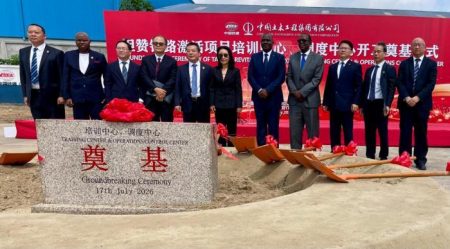
The $1.4billion TAZARA revitalisation project is now underway. During LLZ, participants can expect discussions to unveil the numerous economic and logistics opportunities that come with the TAZARA project. Run by the Tanzania Ports Authority, the Port of Dar es Salaam is one of the busiest gateways on the Indian Ocean and serves as a primary trade route for Zambia and other landlocked countries. Handling the majority of Tanzania’s maritime trade, it is strategically linked to Zambia through the TAZARA railway and the Dar es Salaam Corridor. Its continued expansion and modernisation make it a vital outlet for bulk cargo such as copper and agricultural exports.

Walvis Bay- Ndola – Lubumbashi Corridor (Namibia)

Access to the Port of Walvis Bay will drastically improve after FQM, the Zambian government, and stakeholders partnered to upgrade the Mutanda-Kasempa-Kaoma road – enhancing regional connectivity while boosting agricultural capacity and mining exports! The port provides Zambia with a critical Atlantic Ocean gateway, particularly for trade with Europe and the Americas. Known for its efficiency and deep-water capabilities, the port is supported by the Walvis Bay-Ndola-Lubumbashi Corridor. Its growing capacity and streamlined logistics systems make it an increasingly attractive alternative to traditional eastern routes.

Nacala Corridor (Mozambique)

The Port of Nacala is a deep-water port located in northern Mozambique and is one of the most naturally endowed harbours in the region. The Nacala Corridor offers one of the shortest and potentially most efficient rail routes from Zambia to a seaport, providing significant cost and time advantages. Through the Nacala Corridor, it connects DRC, Zambia and Malawi to the Indian Ocean. Its ability to accommodate large vessels without significant dredging positions it as a cost-effective and efficient option for bulk exports and imports.

Beira Corridor (Mozambique)

Under the CORNELDER concession, the Port of Beira plays a central role in the Beira Corridor, directly linking Zambia to the Indian Ocean. It is particularly important for the transportation of minerals and agricultural commodities. Recent corridor agreements and infrastructure upgrades are enhancing its efficiency and reinforcing its role in regional trade connectivity. A railway line from Kafue to Lion’s Den in Zimbabwe is a much-anticipated project under discussion at LLZ 2026 under the Beira Corridor.

North – South Corridor Port of Durban

Transnet is sending a powerful delegation to LLZ 2026, who will ably represent the Port of Durban as Africa’s largest and busiest port, serving as a major hub for containerised cargo. The delegation is also attending LLZ to share Transnet’s strategy not only along the North-South Corridor for Africa. The North-South Corridor plays a crucial role in facilitating trade for the region and global markets.

Lobito Corridor

Recently, a build-up webinar to LLZ 2026 unpacked the Lobito corridor as an economic corridor affecting not only Angola, DRC and Zambia but the continent at large. The Port of Lobito is emerging as a transformative gateway for Zambia through the Lobito Corridor, linking Angola to Zambia and the Democratic Republic of Congo. With renewed investment and international interest, the corridor is set to significantly reduce transit times to the Atlantic Ocean, positioning Lobito as a key route for copper exports and regional trade diversification.

The participation of these six strategic ports at Land-linked Zambia 2026 underscores the importance of coordinated regional infrastructure and corridor development. By strengthening partnerships between ports and inland logistics systems, Zambia is well-positioned to transition from a landlocked to a land-linked economy, leveraging connectivity to unlock trade, investment, and sustainable growth across the region.

Zambia’s transformation from landlocked to land-linked is already underway, driven by corridors, partnerships, and bold infrastructure investments.

At Land-linked Zambia 2026, these six strategic ports converge to shape the next chapter of regional trade. Be in the room where it happens. Register today and be part of Africa’s connected future.

Register to Attend

Related News Articles