Rail Cannot Be Rebuilt by Paperwork

Rail Cannot Be Rebuilt by Paperwork
Mesela Nhlapo, Chief Executive Officer, African Rail Industry Association (ARIA)

South Africa’s rail recovery requires engineering-led decisions, lifecycle thinking and a public finance system that understands infrastructure.

By: Mesela Nhlapo – CEO of the African Railway Industry Association ARIA

South Africa’s rail recovery will not be achieved through paperwork. It requires disciplined engineering decisions, timely maintenance, credible asset planning, reliable execution and a public finance system that understands infrastructure.

That distinction matters because rail is not a generic procurement category. It is a technical system.

Track, signalling, rolling stock, depots, yards, terminals, power supply, communications, safety systems and corridor operations function as one system. Deferred maintenance, delayed procurement or weak technical planning can quickly become lost freight volume, higher logistics costs and weaker confidence in rail.

The Public Finance Management Act defines fruitless and wasteful expenditure as “expenditure which was made in vain and would have been avoided had reasonable care been exercised”. National Treasury’s guideline explains that “in vain” refers to a transaction, event or condition undertaken without value or substance and which did not yield the desired results or outcome.

That definition must now be turned back on the system itself.

If the public finance framework consumes money, time, technical attention and institutional energy, but produces delayed maintenance, under-deployed capital, slow rolling stock interventions, weakened localisation and reduced network performance, then PFMA compliance must be tested against its own definition.

A railway is not protected by delaying the decision that would preserve the asset.

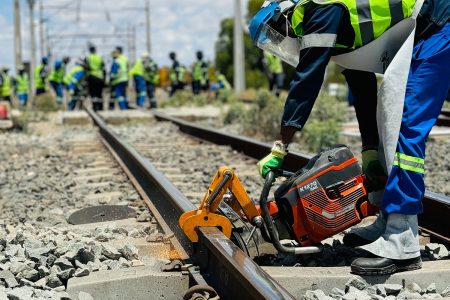
Rail infrastructure does not wait for administrative certainty. Steel corrodes, components wear, signalling systems become unreliable, and corridors lose throughput.

Engineering-led decision-making means that rail authorities act on technical evidence. Asset condition, safety risk, lifecycle cost, maintenance windows, operational continuity and corridor performance must be central legal considerations, not explanations added after the file has moved.

A public finance system that does not understand this will continue to misread rail. It will treat locomotives, track maintenance, signalling, yards, depots and rolling stock as isolated transactions rather than components of an integrated transport system.

The Constitution requires a different logic. Section 195 requires public administration to be development-oriented and to promote efficient, economic and effective resource use. Section 217 requires public procurement to be fair, equitable, transparent, competitive and cost-effective, while permitting preference policies that advance persons disadvantaged by unfair discrimination.

Rail is productive infrastructure. It supports mining, agriculture, manufacturing, ports, regional trade, commuter mobility, industrial localisation, skills development and lower-cost logistics.

A public finance framework that weakens rail decisions does not only delay a procurement. It weakens the economy’s logistics spine.

This is why the PFMA must be costed in rail terms.

Compliance cost must include direct spending on approvals, legal reviews, reporting layers and institutional routing, as well as indirect costs from delayed maintenance, lost freight volumes, unreliable assets, deferred modernisation, weak localisation and reduced corridor performance.

True Rail Value = network performance + public value – compliance cost – delay cost – lost technical capacity.

If a rail entity has an approved capital budget but spends only part of it, the public does not lose only the unspent amount. It also loses the maintenance, availability, localisation, jobs, supplier development and corridor performance that spending would have supported.

The rail sector should call this fruitless retention.

Fruitless retention occurs when approved resources are retained, delayed or under-deployed in a way that appears compliant but destroys avoidable public value. In rail, this can mean budget that does not become track work, maintenance that does not become availability, procurement that does not become capability, and planning that never becomes movement.

The rail industry understands this. A network is judged by what moves, what arrives, what is available, what is maintained and what can be relied upon, not only by the cleanliness of its process record.

The audit question should therefore change: did the decision improve network availability, preserve the asset, reduce lifecycle cost, support local industrial capability, maintain safety, improve corridor reliability, move freight back to rail and strengthen the system’s technical base?

If public finance law cannot ask those questions, it cannot properly govern rail.

This does not mean abandoning lawful controls. It means making the controls intelligent enough to recognise the realities of rail.

Rail needs differentiated public finance rules for engineering-intensive systems. Those rules must recognise asset lifecycle, maintenance urgency, safety-critical procurement, corridor economics, localisation, technical capability and long-term value.

South Africa can open markets, restructure institutions, invite operators, publish network statements and speak about investment. But if the legal operating system still makes timely engineering-led decisions too difficult, the network will remain constrained by the rules said to protect public resources.

Rail recovery requires the state to choose delivery over procedural paralysis.

A railway cannot be rebuilt by paperwork. It must be rebuilt by engineers, planners, operators, artisans, manufacturers, maintainers and decision-makers empowered to act lawfully and on time.

The PFMA must therefore justify its place in rail recovery: its cost, its delay effect, and whether its current interpretation strengthens or weakens engineering-led delivery.

South Africa’s rail future depends on a public finance system that understands infrastructure and enables lawful decisions while the asset can still be saved.

If the current legal operating system prevents rail from moving, it must be reviewed against the constitutional obligation to build, maintain and develop public infrastructure.

Related News Articles