EAC Seventh Development Strategy Prioritises Integrated Transport and Railway Expansion

The East African Community (EAC), in its Seventh EAC Development Strategy 2026/27–2030/31, places transport infrastructure at the centre of its regional integration and economic growth agenda, positioning it as a critical enabler of a competitive, seamless, and prosperous regional bloc.

EAC Seventh Development Strategy Prioritises Integrated Transport and Railway Expansion

Efficient, integrated, and modern transport systems across road, rail, air, and inland waterways are identified as essential to facilitating trade and reducing the cost of doing business across Partner States. While notable progress has been made in recent years, the Strategy acknowledges persistent challenges, particularly in financing, infrastructure maintenance, and intermodal connectivity.

The EAC continues to prioritise its two principal trade arteries, the Northern Corridor, linking Mombasa to Uganda, Rwanda, South Sudan, and eastern Democratic Republic of the Congo, and the Central Corridor, connecting Dar es Salaam to Burundi, Rwanda, Uganda, and eastern Democratic Republic of the Congo.

Investment in these corridors has contributed to measurable efficiency gains. Over the past decade, average cross-border road transport times between key cities have declined by up to 30 percent, driven by improved road infrastructure and the operationalisation of One-Stop Border Posts at key crossings, including Busia, Malaba, Rusumo, and Mutukula.

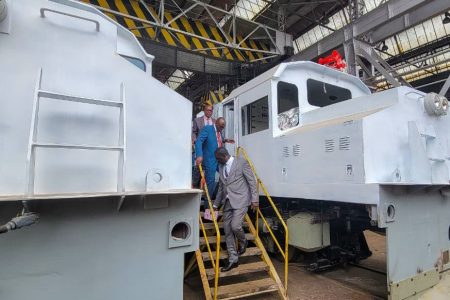
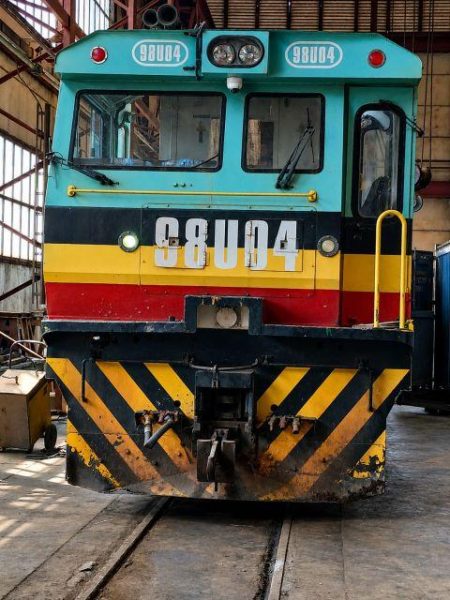
Railway infrastructure is a central pillar of the Strategy, with renewed emphasis on modernisation and expansion to support trade integration and reduce logistics costs.

As of 2024, the total rail network across EAC Partner States spans approximately 5,400 kilometres, with Kenya, the United Republic of Tanzania (URT), and Uganda accounting for the majority of operational lines. Historically dominated by ageing metre-gauge systems with limited interoperability, the sector is undergoing transformation through the development of Standard Gauge Railway (SGR) networks.

Kenya’s Mombasa–Nairobi SGR, completed in 2017 and extended to Naivasha, has significantly improved freight efficiency, reducing transit times from over 24 hours to approximately 8 hours. By 2023, the line was transporting an average of 6 million tonnes of cargo annually, contributing to a modal shift from road to rail.

In Tanzania, the Central Corridor SGR project continues to advance in phases. The completion of Phase 1 and 2, from Dar es Salaam to Dodoma, alongside ongoing extensions towards Mwanza, Kigoma, and neighbouring countries, represents over 1,200 kilometres of railway development. The project has attracted investment exceeding US$7 billion, financed through a combination of public funding and development partner support.

At a regional level, the EAC Railways Master Plan provides the framework for developing an integrated and interoperable railway network. The plan prioritises standard gauge adoption, regulatory harmonisation, and the promotion of public-private partnerships.

Complementary initiatives such as the Tripartite Transport and Transit Facilitation Programme, implemented jointly with COMESA and SADC, aim to improve cross-border infrastructure efficiency and standardisation. Progress is also evident in the alignment of national railway projects with regional corridors, including the rehabilitation of Uganda’s metre-gauge lines to connect with Kenya’s SGR and feasibility studies to extend SGR networks into Rwanda, the Democratic Republic of the Congo, and South Sudan.

The integration of multimodal systems has been further supported by regulatory measures such as the EAC Vehicle Load Control Act and the expansion of inland water transport on Lake Victoria, where investments in port rehabilitation and vessel safety have strengthened regional connectivity.

Despite progress, the Strategy identifies several structural constraints affecting the pace and effectiveness of infrastructure development. These include fragmented project implementation, financing gaps, weak institutional coordination, and inconsistent technical standards across Partner States.

Reliance on bilateral financing arrangements and limited private sector participation continues to constrain large-scale infrastructure delivery, particularly in the railway sector.

To address these challenges, the EAC outlines a set of strategic interventions aimed at accelerating railway development and strengthening regional integration. These include advancing regional railway expansion initiatives through feasibility studies and innovative financing mechanisms, climate-proofing infrastructure to enhance resilience, improving interoperability across networks, and developing centres of excellence to build technical and human resource capacity.

Key targets under the Strategy include the completion of at least two railway expansion studies by 2030/31, the implementation of climate-focused studies and capacity-building programmes targeting 50 railway experts by 2028/29, and the establishment of at least three centres of excellence for railway training, ICT, and technology development within the same timeframe.

The Seventh EAC Development Strategy reinforces the central role of transport infrastructure, particularly rail, in driving regional integration and economic transformation. While substantial progress has been achieved, the successful delivery of a fully integrated and interoperable regional transport network will depend on sustained investment, stronger institutional coordination, and the effective mobilisation of both public and private sector resources.

Download Report

Related News Articles