Burundi is advancing a wider programme of transport infrastructure, logistics planning and institutional development as it works to strengthen its main corridor with Tanzania and prepare for the addition of rail to a transport system that has historically relied on road and lake connections.
The latest procurement plan shows that the programme extends beyond the rehabilitation of individual roads. Alongside major civil works, it includes transport-system planning, road safety, institutional strengthening, technical training and logistics development.
Originally approved in September 2022 with US$120 million in International Development Association financing, the project was designed to improve efficient, safe and climate-resilient road connectivity along the main corridor linking Burundi with Tanzania. It also aims to strengthen the country’s capacity to plan, develop and maintain its transport assets.
A further US$5 million in additional financing was approved in 2025 to replenish funding redirected to the project’s Contingent Emergency Response Component following flood-related emergency requirements. The additional financing retained the project’s existing objectives and scope.
At the centre of the physical works programme is the rehabilitation of the 25 km Bujumbura-Gitaza section of the RN3, together with associated fibre-optic infrastructure. A combined works package also includes 4 km of non-motorised transport infrastructure and fibre-optic installation along the Mwambutsa and Ndadaye Melchior boulevards.
The latest procurement plan values the package at an estimated US$62 million and records the procurement process as under review.
The works form part of Component 1 of the Transport Resilience Project, for which the World Bank has allocated US$75 million to climate-resilient road rehabilitation and associated social infrastructure. The programme includes improvements to the RN3 corridor, pedestrian and cycling infrastructure, provision for fibre-optic networks and selected social infrastructure in communities affected by climate shocks.
Beyond the civil works, the project includes a substantial institutional and planning component. The World Bank has allocated US$28.5 million to institutional strengthening for climate-resilient road infrastructure and logistics planning. This includes strategic planning tools, policy development, a national master plan, a proposed transport-sector regulatory agency and capacity-building initiatives.
Within the latest procurement programme, an estimated US$2.3 million international consultancy covers the design and implementation of strategic planning tools for Burundi’s transport system. The assignment falls under Component 3 and is recorded as being under review.
A separate US$1.12 million technical-assistance assignment covers ministry staff training, institutional capacity for the infrastructure and transport ministries, and capacity development for co-ordinating bodies at national and local level. It is recorded as being in implementation.
These activities extend the Transport Resilience Project beyond individual infrastructure works into wider transport-system planning, logistics and institutional capacity.
The work is taking place as Burundi’s transport network begins to incorporate rail.
Burundi has historically had no domestic railway. Its national development planning has identified the absence of rail and the need to connect with neighbouring railway systems as part of efforts to improve the country’s external transport links.
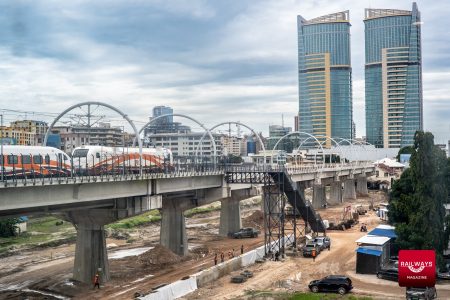
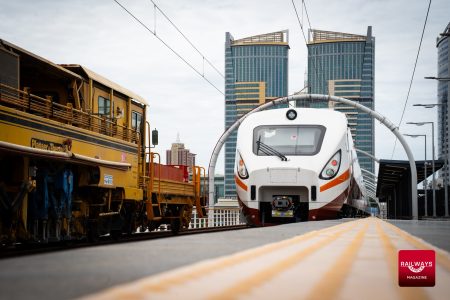
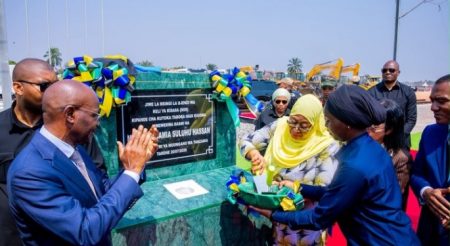
Construction of the Uvinza-Musongati railway was formally launched on 16 August 2025 by Burundi President Evariste Ndayishimiye and then Tanzanian Prime Minister Kassim Majaliwa. Burundi’s Presidency said the Uvinza-Musongati line would extend for 282 km and include eight stations, three in Burundi and five in Tanzania. Construction was expected to take six years.
The African Development Bank-backed programme places the Burundi section within a larger Central Corridor railway investment. Phase II provides for 651 km of single-track electrified SGR, comprising the 411 km Tabora-Kigoma section and 156 km Uvinza-Malagarasi section in Tanzania, together with an 84 km Malagarasi-Musongati section in Burundi. The railway is intended to connect with Tanzania’s SGR system and provide Burundi with rail access towards the Port of Dar es Salaam.
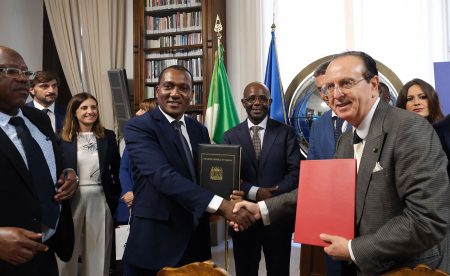
AfDB financing structures valued at US$696.41 million were approved in December 2023 to support the Tanzania and Burundi sections of the programme. The Bank’s project design also includes technical assistance and capacity building to support the creation of a railway sector in Burundi.
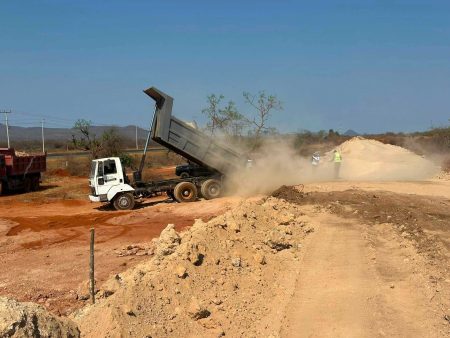
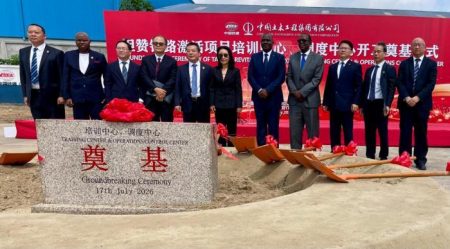
In August 2026, the consortium delivering the Tanzania-Burundi SGR project reported that construction of the project camp at Kasulu, in Tanzania’s Kigoma Region, was progressing. Site preparation was under way, with facilities being built for teams working on the line.
For Burundi, the Transport Resilience Project is progressing alongside the development of its first railway connection. Transport planning, logistics and institutional capacity are being developed while the Uvinza-Musongati project advances through construction, introducing rail into the country’s transport network and providing a planned connection with Tanzania’s Central Corridor.