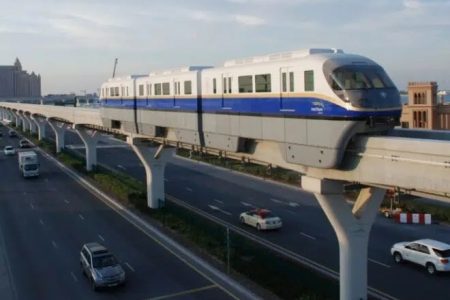
Dar es Salaam’s proposed monorail remains at the preparatory stage, with the feasibility study expected to establish the technical requirements, route alignment, technology, costs and implementation model. These findings will inform decisions on the project’s development and the suitability of a monorail system for the city’s growing transport requirements.
TRC’s intention to involve the private sector signals potential opportunities for investment, technology providers and railway infrastructure suppliers. The feasibility study will be an important step in defining the project’s scope and determining how private sector participation could be structured.
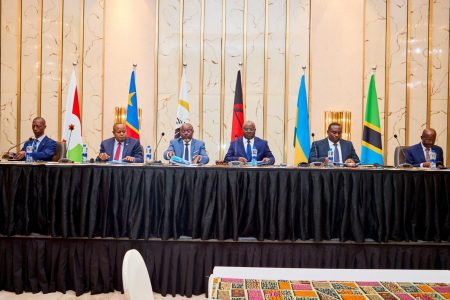
Tanzania Railways Corporation (TRC) has held its first meeting with French consultancy SYSTRA, which is expected to undertake a feasibility study for the proposed monorail project in Dar es Salaam.
The meeting, held on 17 September 2026, marks the beginning of preparations for the project, which is intended to improve public transport and reduce traffic congestion in Tanzania’s commercial capital.
During its presentation, SYSTRA outlined the scope of the proposed feasibility study, which will assess the project’s construction requirements, potential rail alignment, technology options, costs and the most appropriate implementation model.
The project is intended to address growing transport demand in Dar es Salaam, where the population is expected to reach approximately 10 million by 2030.
Speaking to journalists following SYSTRA’s presentation, TRC Director General, Engineer Machibya Shiwa, said the feasibility study would provide the technical basis for determining how the proposed urban rail system should be developed.
“The commencement of this process is an important step in preparations to develop a modern urban transport system. The feasibility study will provide us with a technical basis for determining the best way to implement the project, taking into account the needs of residents and the growth of Dar es Salaam.”
Shiwa also confirmed that TRC intends to involve the private sector in the project to attract additional capital, technology and technical expertise.
“We expect private sector participation in this project, as such cooperation will help bring capital, innovation and technology to the construction and operation of modern transport infrastructure,” he said.
The proposed monorail is expected to reduce travel times, transport costs and traffic congestion while improving access to workplaces, commercial areas and essential services.
According to Shiwa, the project could also improve business efficiency, create employment and investment opportunities, increase property values in areas served by the railway and reduce economic losses associated with time spent in traffic congestion.
He said the initiative forms part of the Tanzanian government’s efforts to strengthen urban transport in line with the National Development Vision 2050, which seeks to develop modern infrastructure and support sustainable urban and economic growth.