The Bahi transhipment facility provides an operational connection between Tanzania's Standard Gauge Railway (SGR) and Meter-Gauge Railway (MGR), enabling containers arriving from Dar es Salaam to continue towards Isaka without waiting for further SGR construction. TRC reports a freight journey of approximately five hours from Dar es Salaam to Bahi, with cargo available to customers at Isaka within 24 hours. The Government's target of moving 1,000 containers per day by rail is linked to efforts to reduce congestion at the Port of Dar es Salaam.
The Minister's directive extends beyond railway operations to the administrative and commercial arrangements required for international freight handling. By instructing TRC, TPA and TASAC to coordinate freight charging, shipping documentation and the proposed direct receipt of international cargo at Bahi and Isaka, the Government is seeking closer integration between port, shipping and railway services. The proposed arrangements would build on the existing SGR/MGR freight transfer operation, with their implementation dependent on further coordination between the three organisations.

Tanzania's Ministry of Transport has directed Tanzania Railways Corporation (TRC), Tanzania Ports Authority (TPA) and Tanzania Shipping Agencies Corporation (TASAC) to coordinate arrangements for Bahi and Isaka to receive international freight directly, building on the integration of standard-gauge and meter-gauge freight operations at Bahi.
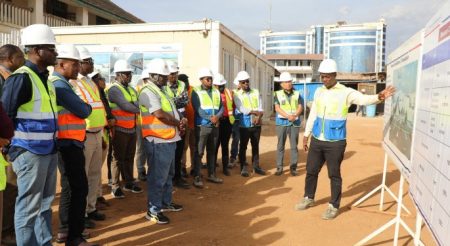
The directive was issued by the Minister of Transport during a visit to the Bahi freight terminal in Dodoma, as part of a four-day inspection of construction progress on Sections 2 to 5 of Tanzania's Standard Gauge Railway (SGR).
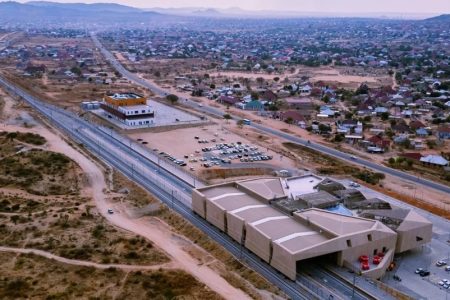
Under the existing freight-handling arrangement, containers transported from Dar es Salaam on the SGR are transferred to the Meter-Gauge Railway (MGR) at Bahi for onward movement to Isaka. The completed Bahi transhipment facility provides the connection between the two railway systems, allowing freight to continue beyond the operational SGR section using the existing meter-gauge network.
According to TRC, the completion of the facility has improved container transport efficiency. The corporation reports that freight trains take approximately five hours to travel from Dar es Salaam to Bahi, with the arrangement supporting the availability of cargo to customers at Isaka within 24 hours.
The Minister said the integration of SGR and MGR freight operations was intended to help reduce container congestion at the Port of Dar es Salaam. The stated target is to move 1,000 containers per day by rail, against the port's reported daily outward movement of approximately 3,000 twenty-foot containers.
Alongside the railway operations, the Minister instructed TRC, TPA and TASAC to examine how international freight could be received directly at Bahi and Isaka, including the administrative and commercial arrangements required to support the movement of cargo between the port, railway and shipping operators.
Following a recent visit to Egypt, the Minister directed the three organisations to send technical specialists to study the country's approach to integrating railway, port and shipping operations.
Attention is to be given to freight charging arrangements and the preparation of bills of lading, with the Minister referring to the involvement of international shipping companies operating in Tanzania.
The proposed coordination between TRC, TPA and TASAC is intended to align freight-handling arrangements with the physical movement of containers through the rail network.
TRC also reported that its SGR passenger services had carried a cumulative 7.6 million passengers since operations began in July 2024.
The Bahi freight operation forms part of Tanzania's efforts to increase the use of rail for cargo transported through Dar es Salaam Port, combining the capacity of the new standard-gauge infrastructure with the reach of the existing meter-gauge network.