Tanzania and South Korea Review SGR Rolling Stock Plan as EDCF Projects Advance

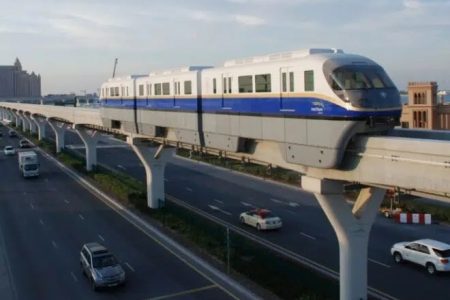
The planned SGR rolling-stock procurement has moved into a joint cost-and-scope review between Tanzania and South Korea, establishing the next step before the project can advance under the EDCF framework.

At the same time, the separate inclusion of rail wagons in discussions around the Mahenge graphite project shows that rail capacity is being considered alongside the infrastructure needed to support Tanzania’s mineral logistics and export value chain.

Tanzania and South Korea Review SGR Rolling Stock Plan as EDCF Projects Advance
The Tanzanian delegation with POSCO International in Seoul. © Ministry of Finance, Tanzania

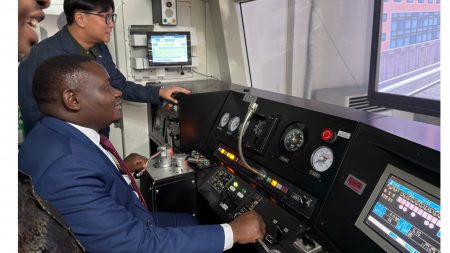
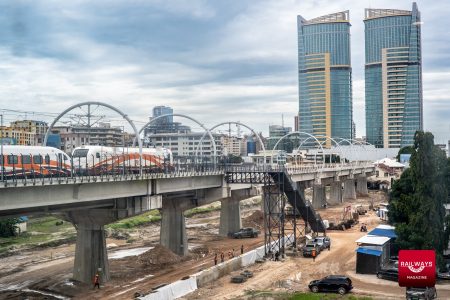
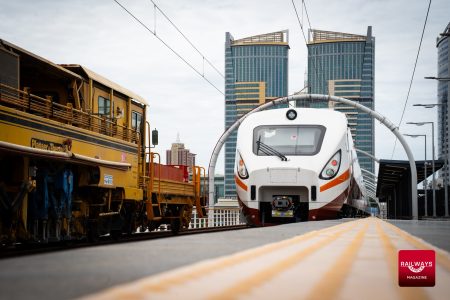
Tanzania and South Korea are to jointly review the cost and scope of a planned rolling-stock procurement for Tanzania's standard gauge railway (SGR), as the two countries look to accelerate implementation of projects linked to South Korea's US$2.5 billion development cooperation commitment.

In a Ministry of Finance update on LinkedIn, Minister of Finance Ambassador Khamis Mussa Omar said the agreement was reached during discussions in Seoul with the Export-Import Bank of Korea (Korea Eximbank), which implements projects financed through Korea's Economic Development Cooperation Fund (EDCF).

The review is intended to determine how the SGR rolling-stock project can be implemented effectively. It forms part of a wider portfolio of strategic projects being considered under South Korea's US$2.5 billion commitment to Tanzania, covering transport infrastructure, technology, industry, health and culture.

Tanzania and South Korea Review SGR Rolling Stock Plan as EDCF Projects Advance
Tanzania and South Korea at the KOAFEC Ministerial Conference in Seoul. © Ministry of Finance, Tanzania.

Omar said Tanzania valued its development cooperation with South Korea but called for faster progress on projects agreed under the EDCF framework. He said delays affecting implementation, feasibility studies and detailed engineering design needed to be addressed through closer coordination, noting that some projects had taken several years to advance.

The discussions took place on the sidelines of the Korea-Africa Economic Cooperation (KOAFEC) Ministerial Conference in Seoul and included a review of projects associated with commitments made during President Samia Suluhu Hassan's 2024 visit to South Korea.

Among the transport-related projects discussed was the proposed Ifakara-Mahenge road, which is linked to development of the Mahenge graphite project.

The graphite project also featured in separate talks between the Tanzanian delegation and POSCO International. Omar and Minister of Communication and Information Technology Angellah Kairuki met company representatives to discuss investment opportunities in mining, energy and agriculture, with the Mahenge project forming a central part of the discussions.

According to the Tanzanian government, the project is in the final stages of a capital increase process expected to be completed during 2026.

Supporting infrastructure for the mineral value chain was also discussed, including road construction and the procurement of rail wagons. The government said these projects are being pursued in cooperation with the EDCF and Korea Eximbank.

The Tanzanian delegation also presented proposals for broader cooperation with POSCO International in mineral beneficiation and the development of nickel, cobalt and copper processing industries, particularly in the Dodoma region.

POSCO International Executive Vice President Jae Sung Lim described Tanzania as one of the company's five principal strategic partners in Africa. The company also announced plans to establish a representative office in Tanzania, replacing the current arrangement under which its activities in the country are managed from South Africa.

For the railway sector, the most immediate development is the agreement to review the cost and scope of the planned SGR rolling-stock procurement, while the separate discussions around Mahenge indicate that rail freight requirements are also being considered as part of the infrastructure needed to support Tanzania's mineral value chain.

Related News Articles