The AfDB's figures describe the fiscal position within which Cameroon finances its transport and railway programme, with public debt at 44.3% of GDP, debt service equal to 40.1% of tax revenue and a 2026 financing requirement of more than FCFA 3,100 billion.
Its recommendations on domestic revenue and spending efficiency set the terms against which new infrastructure commitments will be measured.
- The African Development Bank projects growth of between 3.3% and 4.0% for Cameroon in 2026.
- Cameroon's public debt stood at FCFA 15,416 billion at the end of March 2026, equivalent to 44.3% of GDP, according to the AfDB.
- Debt service absorbs 40.1% of Cameroon's tax revenue.
- The AfDB puts Cameroon's financing requirement for 2026 at more than FCFA 3,100 billion.
- CEMAC grew by 2.6% in 2025, while income per head fell by 0.1%.
- The reports were presented in Yaoundé on 22 September at a seminar co-chaired by MINEPAT and the AfDB.
The African Development Bank (AfDB) projects growth of between 3.3% and 4.0% for Cameroon in 2026, according to its 2026 regional economic outlook reports, presented in Yaoundé on 22 September.
The AfDB puts Cameroon's public debt at FCFA 15,416 billion at the end of March 2026, equivalent to 44.3% of GDP, with debt service absorbing 40.1% of tax revenue. It puts the country's financing requirement for 2026 at more than FCFA 3,100 billion.
For the Central African Economic and Monetary Community (CEMAC) as a whole, the AfDB reports growth of 2.6% in 2025, with income per head falling by 0.1%.
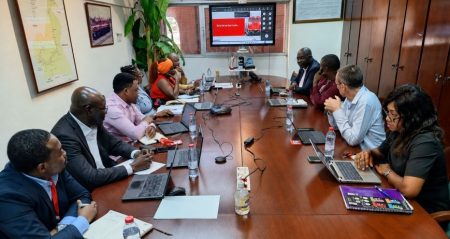
The reports were presented at a seminar co-chaired by Paul Tasong, Minister Delegate to the Minister of the Economy, Planning and Regional Development, in charge of Planning, and Dr Léandre Bassole, Director General of the AfDB's regional office. Yvon Sana Bangui, Governor of the Bank of Central African States (BEAC), attended. The seminar also reviewed implementation of the AfDB's 2023–2028 Country Strategy Paper for Cameroon.
The AfDB's recommendations centred on mobilising domestic revenue, improving the efficiency of public spending, accelerating the local processing of raw materials and improving the business environment. Tasong stressed the need for strategic and efficient management of the resources mobilised.