TRIM Update on Open Access, Corridor Rehabilitation and Security Interventions

In a Transnet podcast recorded at the Investing in African Mining Indaba 2026, the Chief Executive of Transnet Rail Infrastructure Manager (TRIM), Moshe Motlohi, outlined progress since the establishment of the division as an operating entity.

TRIM’s mandate is focused on network rehabilitation and enabling third-party access.

Motlohi said that, to date, 11 train operating companies had been identified as potential participants on the system. The names had not yet been made public, pending completion of contractual requirements. He indicated that the compliant operators would be announced once outstanding matters were finalised.

Under the current model, Transnet Rail Infrastructure Manager functions as the infrastructure landlord. It is responsible for the permanent way, electrification, signalling and security, while train operating companies, including Transnet Freight Rail, operate as tenants under defined rules of engagement.

Motlohi explained that the network statement framework allocates access based on corridor capacity. Pricing proposals had been submitted to the interim economic regulator, which evaluates the requested tariffs against industry feedback before making a determination. Corridor pricing differs depending on characteristics such as traffic type and capacity constraints.

Operators accessing the network are required to meet statutory compliance obligations, including environmental and labour requirements, and to adhere to agreed performance commitments. Oversight mechanisms are intended to ensure smooth cargo flows and prevent operational conflicts between operators.

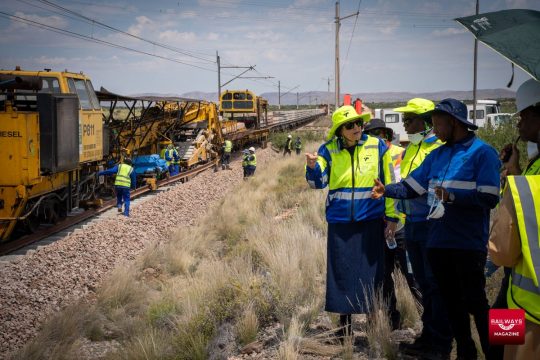
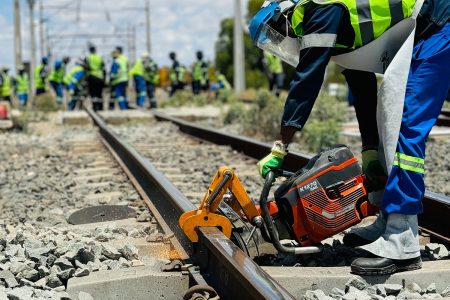
From an infrastructure perspective, six priority corridors have been identified for focused intervention. These include heavy-haul export corridors and container and general freight routes. Motlohi stated that diagnostic scanning technology had been deployed to identify infrastructure defects at specific kilometre points. The tool is used to inform maintenance planning and to verify interventions once completed.

He reported that improvements across the six corridors had resulted in measurable gains, citing a 10.7 per cent increase in volumes on one corridor following maintenance and security interventions.

Security remains a significant focus area. Motlohi outlined an intelligence-led approach targeting the broader value chain associated with cable theft, including exporters. Working with enforcement and port-related entities, the division reported a reduction in cable losses on the North corridor from 189 kilometres in one year to 59 kilometres the following year. The reduction was associated with fewer train cancellations and increased service availability.

Technology deployment includes drones, surveillance systems and detection tools. Motlohi noted that change management processes were being implemented to support workforce adaptation as new technologies were introduced. He also indicated that some telecommunications fibre capacity might be made available to communities as part of efforts to build local support for protecting rail infrastructure.

Beyond infrastructure, the division is pursuing multi-source funding strategies, including revenue from services, grants and loans. Motlohi also referenced the assessment of rail-adjacent land and property assets for potential industrial park development and monetisation, including the use of abandoned stations.

In addition, opportunities for localisation within the supply chain are being examined, particularly for subcomponents used in locomotive and maintenance operations.

Addressing governance, Motlohi stated that infrastructure remains state-owned and that the reform does not constitute privatisation. Information separation measures have been implemented between Transnet Rail Infrastructure Manager and Transnet Freight Rail to support operational independence under the new structure.

Editor’s note: Essentially, there are two things that we are waiting for. The first being the names of the 11-TOC’s, although being public procurement, these should have been made publicly available from the start. The second is the updated Network Statement, which is due out this month, in February.

If you missed the Transnet podcast:


Footnote

Written by Phillippa Dean

Related News Articles