Kenya 2026 Budget Policy Prioritises Rail And Logistics Modernisation

Kenya’s 2026 Budget Policy Statement sets out a programme of infrastructure and policy interventions aimed at accelerating economic transformation, lowering the cost of doing business and improving the movement of people and goods. Transport and logistics feature prominently, with rail identified as a key enabler of national competitiveness and regional connectivity.

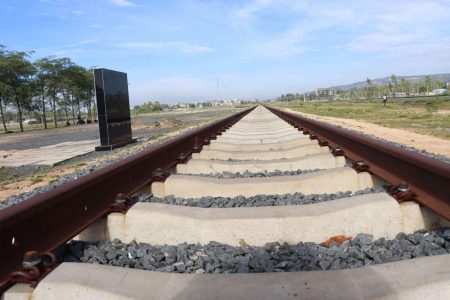
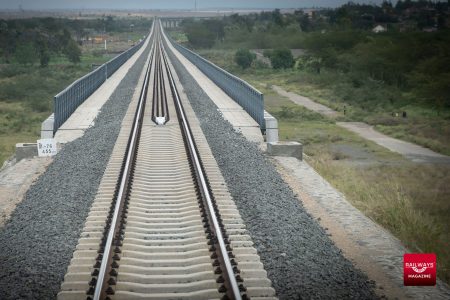
The Government confirms that it has completed construction of the Miritini MGR Station at the Mombasa Terminus, including a new metre gauge railway link and a railway bridge across the Makupa Causeway. The works are intended to provide seamless first- and last-mile connectivity for Standard Gauge Railway passengers.

As part of efforts to strengthen the transport policy framework, the Government has developed the National E-Mobility Policy to guide the transition to clean and sustainable transport technologies, the National Road Safety Action Plan 2024 to 2025, and the National Logistics and Freight Strategy for horticulture exports.

A comprehensive ten-year infrastructure programme is planned to address existing gaps. This includes dualling 2,500 kilometres of priority highways, surfacing an additional 28,000 kilometres of roads and expanding strategic transport corridors through Public Private Partnerships. Rail development forms part of this wider transport and logistics modernisation agenda.

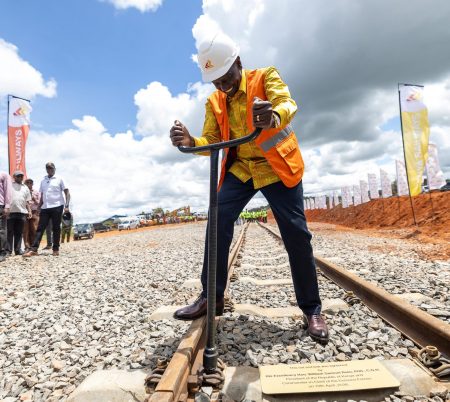
The extension of the Standard Gauge Railway from Naivasha to Kisumu and onward to Malaba has begun, marking a step towards enhanced regional connectivity. The statement also identifies modernisation of the railway system as a priority within the broader transport and logistics investment framework.

Performance data included in the statement show that the services sector recorded growth of 4.8 percent in the first quarter, 5.5 percent in the second quarter and 5.4 percent in the third quarter of 2025. Within this, the transportation and storage sub-sector expanded by 3.7 percent, 5.4 percent and 5.2 percent respectively, across the same quarters. Growth in the sub-sector was supported by increased activity in road, water and air transport, as well as railway operations.

Transport and logistics investments also extend to the modernisation of Jomo Kenyatta International Airport, the building of a new international airport, development at the Ports of Mombasa and Lamu and reforms aimed at restoring the operational and financial stability of Kenya Airways. Additional priorities include completing port berths, establishing logistics hubs and enhancing maritime safety through programmes such as Vijana Baharia.

The statement highlights the scale of public sector exposure within the rail sector. The cumulative on-lent loan portfolio stands at KSh 1,051.1 billion, of which Kenya Railways Corporation accounts for KSh 547.4 billion, representing 52 percent of the total. This concentration reflects a significant exposure within a single entity.

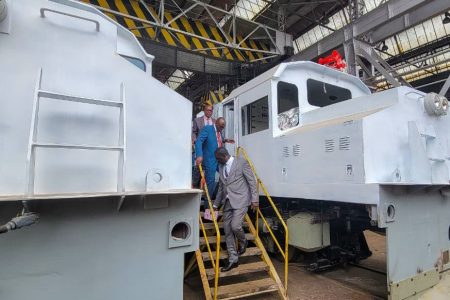
Overall, the Budget Policy Statement frames the modernisation and expansion of transport and logistics infrastructure, including rail, as essential to connecting markets, reducing the cost of doing business and reinforcing Kenya’s position as an aviation and commercial hub for East and Central Africa.

Footnote

Written by Phillippa Dean

Related News Articles