Genmin identifies written railway capacity allocations and tariff terms as a requirement for Baniaka’s financing. Its report separates contracted port tonnage from the railway capacity and commercial terms still being negotiated.
The company says the study addendum will provide investors and financiers with an updated technical and economic basis for evaluating Baniaka. The possible Congo corridor remains subject to assessment and government approvals before it can enter that development case.
- Genmin’s 30 October report covers the quarter ended 30 September 2026.
- The amended Owendo schedule covers port tonnage of one million tonnes in 2027, three million in 2028 and five million a year from 2029; it does not provide railway capacity.
- The approximately 285 km Mont-Bélo–Mbinda line was assessed as part of a possible complementary corridor and would require refurbishment.
- The non-binding NORDEN memorandum lasts 12 months and does not require a definitive agreement.
- Genmin expects remaining study inputs to be resolved during the March 2027 quarter before completing the addendum.
Genmin has deferred completion of the pre-feasibility study addendum for its Baniaka iron ore project in Gabon while it finalises rail capacity, tariffs, port charges and other technical inputs. According to Genmin’s quarterly activities report for the period ended 30 September 2026, released on 30 October, the company expects the remaining inputs to be resolved during the March 2027 quarter, after which the addendum is to be completed.
The study had previously been expected during the September 2026 quarter. Genmin reports that several outstanding inputs depend on negotiations with third-party rail and port providers. Processing plant capital and operating costs, mining costs, Ore Reserves and the mine schedule also remained to be finalised at the quarter-end.
Its principal development strategy continues to use the Trans-Gabon Railway and existing port infrastructure. Its quarterly report also sets out work on a possible complementary route through the Republic of Congo, alongside changes to its Owendo port arrangements and a non-binding shipping memorandum.
On 7 August 2026, Genmin’s wholly owned subsidiary Ressources Minières d’Afrique Centrale Gabon S.A. (Reminac) signed a second amendment to its agreement with Owendo Mineral Port (OMP). The original 15-year agreement dates from 20 February 2023 and had previously been amended on 6 November 2024.
The latest amendment resets guaranteed port tonnage to one million tonnes a year in 2027, three million tonnes in 2028 and five million tonnes from 2029. It extends the period for satisfying Reminac’s conditions precedent to 56 months from the original agreement date.
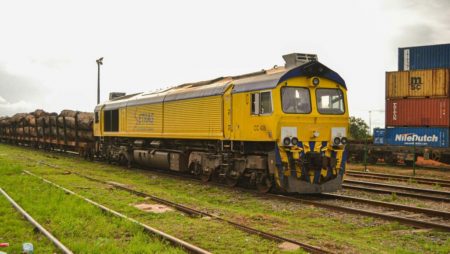
These tonnages cover port services at Owendo. The amendment does not allocate capacity on the Trans-Gabon Railway, which remains subject to a separate agreement with Société d’Exploitation du Transgabonais (SETRAG). Reminac will pay SETRAG’s rail access charges directly. Pricing for OMP’s services remained under negotiation, with no revised tariffs concluded at 30 September.
The planned Phase 2 direct ship-loading quay has been suspended in favour of dedicated iron ore port operations capable of loading Capesize vessels. This arrangement is conditional on Reminac committing to a minimum cargo volume and agreeing a firm commencement date. Until commercial operations begin, OMP may temporarily allocate Reminac’s reserved capacity to third parties.
In August, Reminac also signed a non-binding memorandum of understanding with Dampskibsselskabet NORDEN A/S to evaluate trans-shipment, ocean freight, port logistics and supply-chain options for exports through Owendo and/or Pointe-Noire. The memorandum runs for 12 months and does not oblige either party to enter into a definitive agreement.
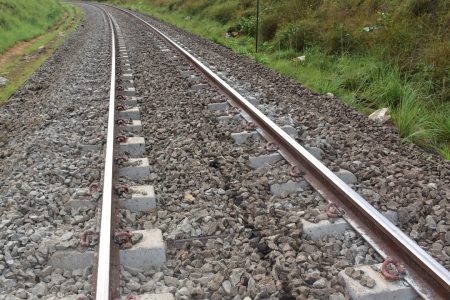
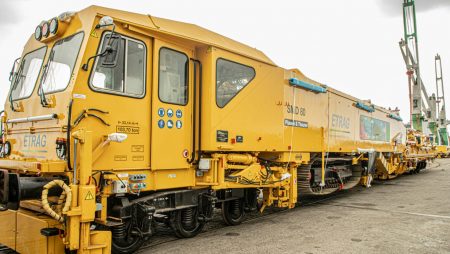
Work on the possible Republic of Congo corridor included commercial discussions and a proposed memorandum of understanding with that country’s government. A Genmin representative travelled the approximately 285km Mont-Bélo–Mbinda railway in September as part of a technical viability assessment. The line would require refurbishment, and Mine Scope Services was engaged to prepare the associated technical report.
Genmin states that any complementary corridor would require further technical, commercial, social, environmental and funding assessment, together with approvals from the governments of Gabon and the Republic of Congo, before entering the formal development case. It has made no decision to replace the Trans-Gabon route.
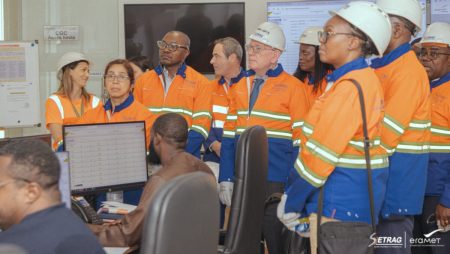
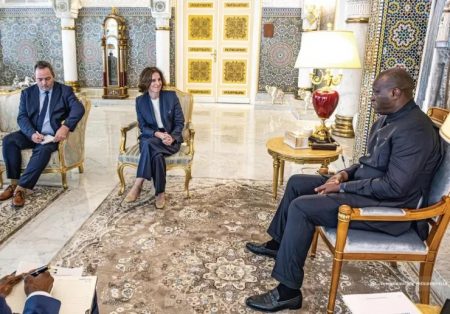
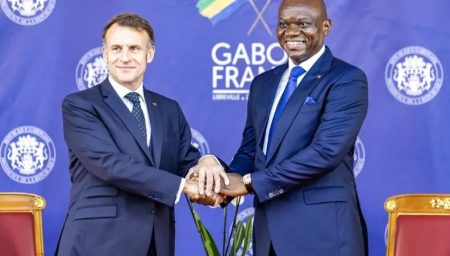
Rail capacity and tariffs were also discussed at an August meeting between Genmin’s leadership and Gabon’s Vice President of Government, Hermann Immongault. Genmin reports that it continues to seek written confirmation of its capacity allocation and tariff terms, identifying these as a requirement for project financing.
Funding discussions with potential investors, lenders and other counterparties remained incomplete and non-binding. Genmin reported A$3 million of unsecured director-related working-capital facilities, of which A$2.5 million had been drawn by 30 September and the remaining A$0.5 million was received in October. The company expressly distinguished these facilities from full funding for Baniaka’s development.
At 30 September, Genmin held US$0.61 million in cash and cash equivalents and reported approximately 0.4 quarters of funding available. It expected monthly operating expenditure to fall from December and was seeking further near-term working capital. The board’s assessment that operations could continue depended on securing that funding.
Genmin’s stated priorities for the December quarter include further negotiations with OMP and SETRAG, funding discussions, assessment of the possible Congo corridor and progress towards completing the study addendum after the remaining inputs are resolved.