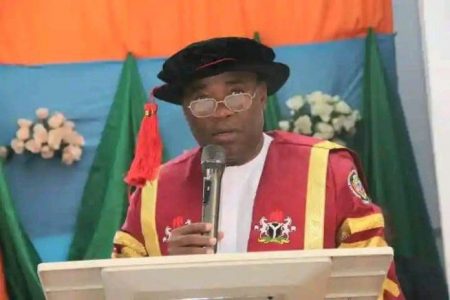
The Nigerian Railway Corporation (NRC) was among the top ten contributors to Nigeria’s Gross Domestic Product in 2025, according to its Managing Director, Dr Kayode Opeifa, citing data from the National Bureau of Statistics.
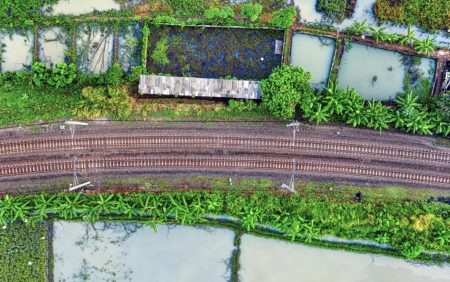
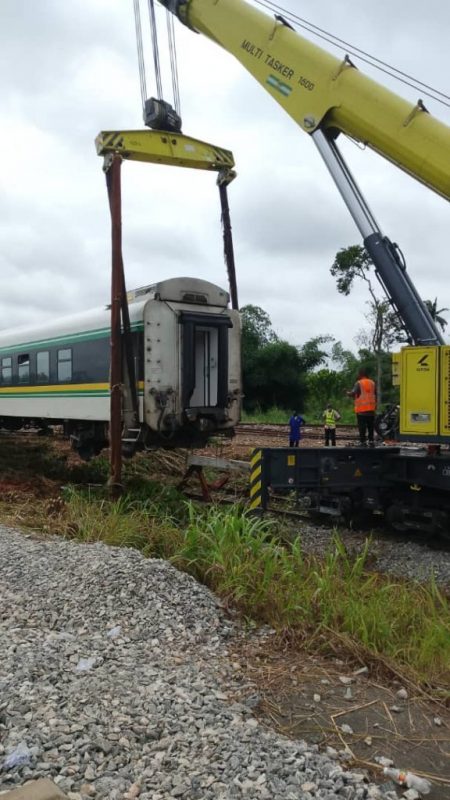
Based on the latest NBS report, the NRC ranked among the leading revenue-generating federal ministries, departments and agencies contributing to national economic growth. Despite this performance, the corporation continues to face operational challenges, including vandalism, infrastructure washouts and funding constraints.
While acknowledging that federal government support to the NRC exceeds the corporation’s internally generated revenue, Opeifa indicated that additional funding remains necessary to enable optimal operations across the network.
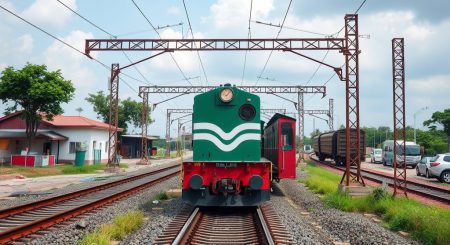
He confirmed that both narrow-gauge and standard-gauge services are currently operational in Nigeria, adding that the NRC is implementing an aggressive recovery programme for locomotives, wagons and other rolling stock to improve efficiency and service reliability.
As part of its energy transition strategy, the NRC plans to introduce Liquefied Natural Gas-powered trains on the Lagos–Ibadan and Warri–Itakpe corridors once gas infrastructure along these routes becomes fully available. The corporation has completed the LNG concept phase and successfully demonstrated the technology over a one-month period, representing a significant step towards cleaner and more efficient rail operations.
The adoption of LNG aligns with Nigeria’s broader gas expansion agenda and is expected to reduce operating costs while strengthening energy security within the rail sector.
Beyond energy initiatives, the NRC is preparing to unveil a national rail roadmap aimed at expanding the country’s rail network from approximately 4,000 kilometres to 10,000 kilometres within five years. Longer-term plans envisage growth to around 20,000 kilometres over the next two decades.
Achieving these targets will require substantial private-sector involvement, as government budget allocations alone are insufficient to fund large-scale rail expansion. The corporation is therefore open to concessioning arrangements and other partnerships, with the federal government prepared to provide sovereign guarantees in line with international practice.
Despite ongoing security challenges, rail services have continued, supported by the expertise of railway engineers and technical personnel. The NRC has emphasised the importance of community ownership of railway assets as a deterrent to vandalism, particularly along the Warri–Itakpe corridor, where repeated infrastructure damage has required extensive track replacement.
Looking ahead, the corporation is introducing digital systems and advancing major network expansions, including the completion of the Lagos–Kano line, the Port Harcourt–Maiduguri corridor, and the Ajaokuta–Abuja connection to enable continuous north–south rail travel.
The NRC is also collaborating with several state governments, including Lagos, Zamfara, Plateau, Niger and Ogun, to maximise the utilisation of rail assets. Private-sector participation is already increasing, with licensed logistics operators using NRC infrastructure to move freight from Apapa Port to destinations such as Oyingbo, Papalanto, Kajola, Omi Adio, Moniya and Osogbo.
The corporation has opened its tracks to private operators willing to invest in locomotives and rolling stock, allowing access without additional track usage charges, on the basis that increased rail activity delivers broader economic benefits.
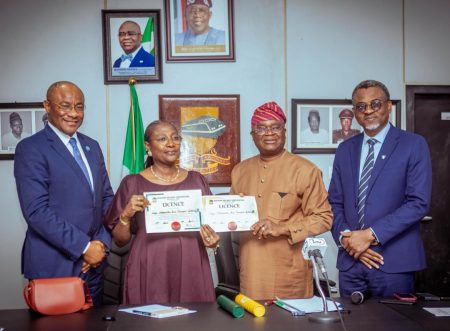
Reflecting on progress over the past year, Opeifa noted that the NRC has stabilised from a previously critical state and is now positioned for growth. He added that renewed investor interest and the recent uptake of operating licences reflect growing confidence in Nigeria’s evolving rail sector.