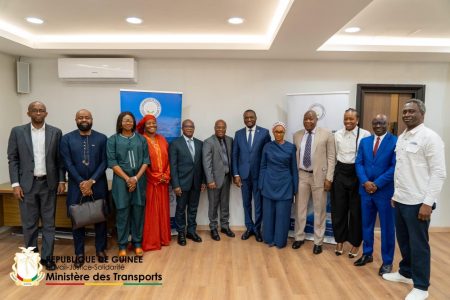
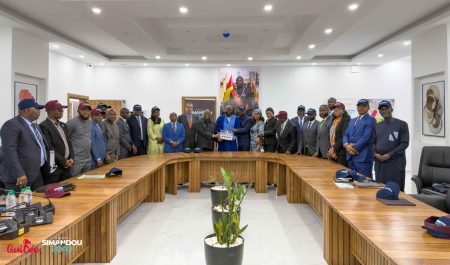
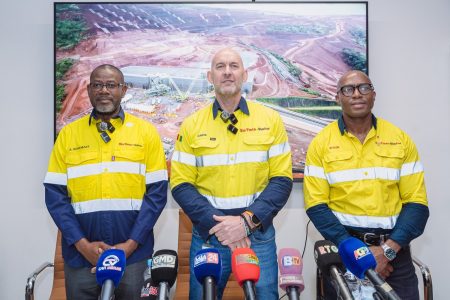
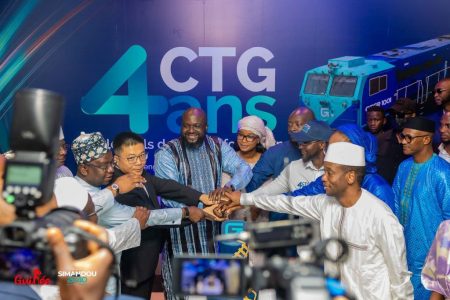
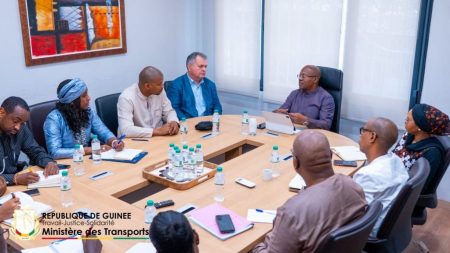
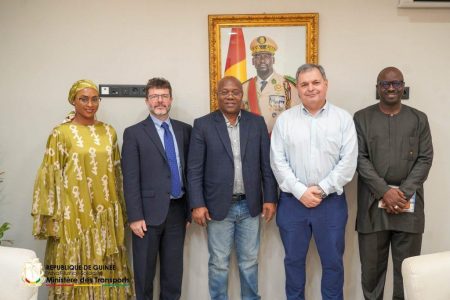
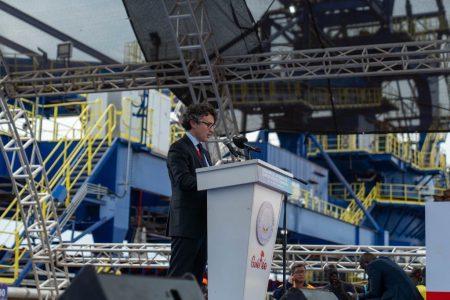
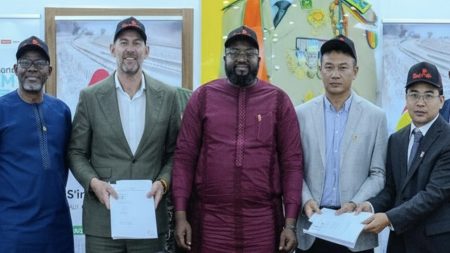
The management of the Trans-Guinean Railway Company, CTG, held a press conference at the Government Communication Unit on Thursday, 16 April 2026, providing an update on the progress of the Simandou megaproject and outlining the future role of the Trans-Guinean Railway.
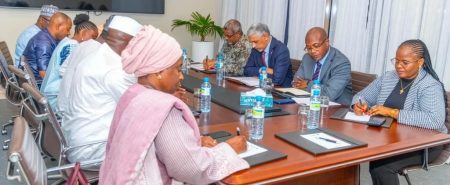
Led by the Chairman of the Board of Directors and the Deputy Director General, the engagement with the media and civil society focused on infrastructure progress, compliance with international environmental and social standards, local content, skills transfer and the broader “Guineanisation” of the company.
The Simandou project has long been regarded as a strategic national ambition for Guinea. Structured around two mining entities and a central logistics entity, CTG, the project is being developed through a co-development model in which the Guinean state holds a 15% free stake alongside major international industrial partners.
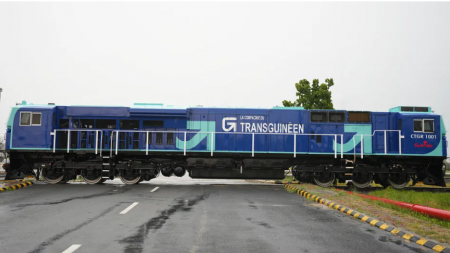
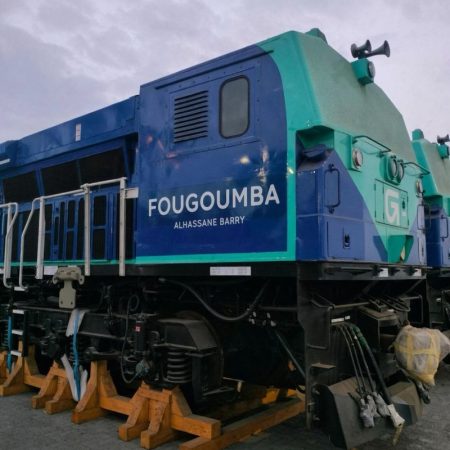
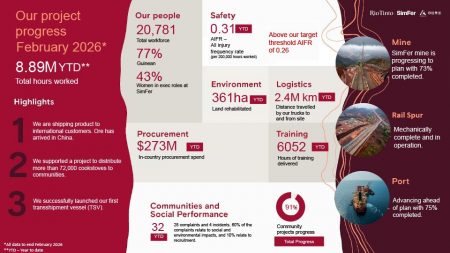
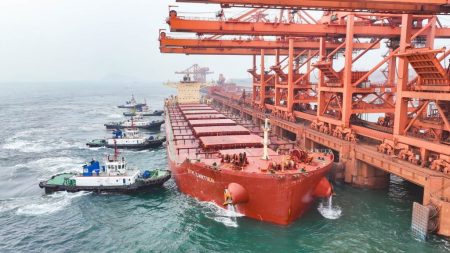
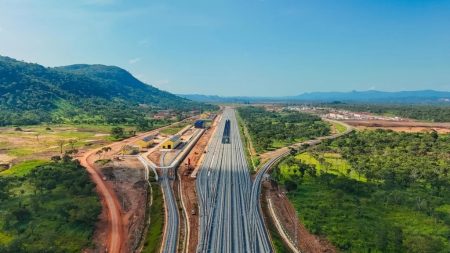
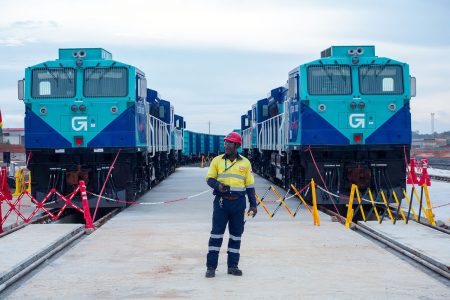
At the centre of the project is a 650-kilometre railway linking the mining blocks to the coast. The wider infrastructure programme also includes a mineral port with an export capacity of 120 million tonnes per year, a commercial port and new housing developments for workers.
CTG emphasised that the importance of the project lies not only in the scale of the infrastructure, but also in the speed of execution and the application of strict standards during development. The railway is being positioned as a core logistics artery for the Simandou project and as a strategic infrastructure asset for Guinea.
The Trans-Guinean Railway is not intended to serve mining activity alone. Under the multi-user and multi-purpose agreement, the line is expected to support wider national transport needs. CTG plans to open the railway to passenger and commercial freight transport between the end of 2026 and 2027, with the potential to transform mobility and support the development of agro-industrial hubs along the corridor.
Environmental and social compliance was also a central part of the update. CTG reaffirmed its commitment to the environmental and social standards of the International Finance Corporation, with compliance assessed monthly in coordination with the Ministry of the Environment. The company also linked the quality of Simandou ore to the wider decarbonisation agenda, noting its potential contribution to reducing the global carbon footprint when processed into green steel.
On community impact, CTG stated that affected communities are being managed through compensation and livelihood restoration measures. The company maintained that no affected person had been left without compensation and indicated that any shortcomings should be reported for immediate action.
The local content and human capital development component was presented as a central part of the project’s long-term value for Guinea. According to CTG, the Simandou agreements go beyond the traditional framework of Guinean local content law and are intended to support a broader process of “Guineanisation” within the company.
This plan is structured around three main pillars: the employment of Guineans, the awarding of contracts to national companies, and the transfer of skills and technologies.
By the end of 2026, the objective is to reach 3,000 jobs across CTG and its subcontractors, with at least 70% of those positions held by Guineans. CTG indicated that this target applies not only to unskilled roles but also to management positions.
To support skills transfer, a mechanism has been introduced whereby, when an expatriate is recruited because an immediately available local candidate cannot be identified, a Guinean deputy position is created to work alongside that person. The transfer of skills is expected to take place over a period of one year to support a smooth transition.
The appointment of a Guinean woman to the strategic position of Director of Human Resources was highlighted as an example of CTG’s commitment to internal promotion and inclusivity. The company’s stated ambition is to achieve full “Guineanisation” of CTG within three years.
Governance and transparency were also presented as core principles of the project. CTG stated that agreements, conventions and contractual documents have been made public, reinforcing its commitment to transparency.
The Simandou project is being positioned as more than a mining and logistics development. Through the Trans-Guinean Railway, associated port infrastructure, local employment commitments and planned future access for passenger and commercial freight services, CTG is presenting the project as a catalyst for national economic development and a major step in Guinea’s infrastructure transformation.