Liberia Advances Draft National Railway Authority Act Through Stakeholder Validation

Why it Matters

Liberia’s proposed National Railway Authority Act is positioned as a shift away from a rail model largely tied to individual mining concessions and towards a more transparent, multi-user framework. For the country’s rail sector, that distinction matters because access, regulation and infrastructure planning are central to attracting long-term investment.

The validation process also places rail within Liberia’s broader economic development agenda. If enacted, the legislation could support mining exports, agricultural commercialisation, industrial development, employment creation and corridor connectivity, while providing a more durable legal foundation than executive orders alone.

Liberia Advances Draft National Railway Authority Act Through Stakeholder Validation
Source: Law Reform Commission, Liberia.

Liberia has taken a further step towards establishing a permanent legal framework for the governance of its railway sector, with stakeholders validating the draft Liberia National Railway Authority Act of 2026 in Monrovia.

The one-day National Validation Workshop was held on Thursday, 25 June 2026, at the Ministry of Mines and Energy conference room on Capitol Hill. The process brought together the Law Reform Commission, Ministry of Justice, the Liaison Office of the Liberia National Railways Authority, Governance Commission, Ministry of Transport, National Investment Commission, Ministry of Finance and Development Planning, Environmental Protection Agency, Ministry of Mines and Energy, railway technical experts, mining experts, development partners and other stakeholders.

According to the Law Reform Commission, the proposed legislation is intended to reposition Liberia’s railways as strategic national assets serving multiple users and sectors of the economy. The Act is expected to support a more transparent and predictable railway governance framework, with provisions aimed at improving competitive access, regulatory certainty, infrastructure expansion and national development planning.

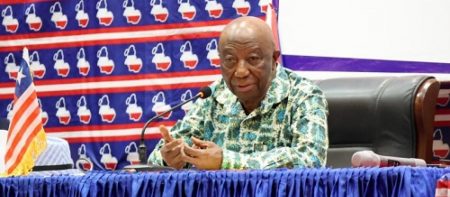
Law Reform Commission Chairman and Chief Executive Officer Cllr. Bornor M. Varmah said the proposed framework could help unlock significant economic opportunities for Liberia. He identified five potential economic dividends, including improved investor confidence, increased mining production and exports, support for agricultural commercialisation, industrial development through lower transport costs and improved corridor connectivity, and employment creation through railway construction, maintenance, operations and related value chains.

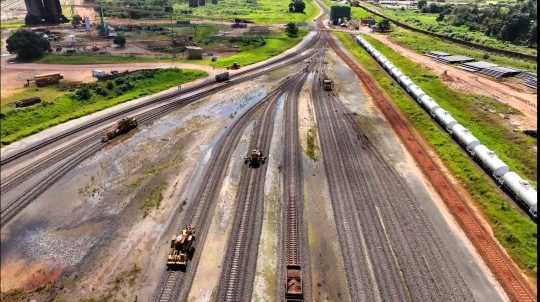
The proposed Act also seeks to move Liberia beyond the historic concession-based railway model, under which rail infrastructure was largely developed and used to support specific mining operations. While that model contributed to economic activity, the Law Reform Commission noted that it also limited wider national access and constrained opportunities for diversified economic growth.

The validation process follows Executive Orders issued under President Joseph Nyuma Boakai, Sr., which provided an interim framework for establishing and operationalising the Liberia National Railway Authority. Those orders recognised rail infrastructure as a strategic driver of national development and highlighted the need for an independent regulatory and oversight institution to support fair access, safety, efficiency, transparency and accountability in the management and use of Liberia’s railway assets.

The Law Reform Commission noted that executive orders are temporary by nature and that the long-term sustainability and legitimacy of the Authority require a comprehensive legislative foundation enacted by the National Legislature. The draft Act is intended to provide that permanent legal framework.

Stakeholder participation was presented as central to the validation process, with contributions expected to help ensure that the final legislation reflects international best practice while responding to Liberia’s specific development priorities. The Commission said the proposed Authority must be equipped to fulfil its mandate effectively and responsibly within a participatory, inclusive and transparent law reform process.

Ignatius Saymel Neepaye, Liaison Officer of the Liberia National Railways Authority, commended the Law Reform Commission, stakeholders and development partners for their role in advancing the process towards the establishment of the Authority.

Related News Articles