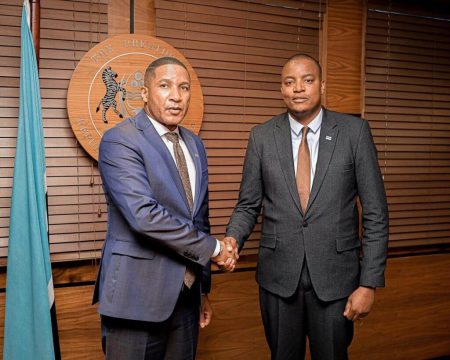
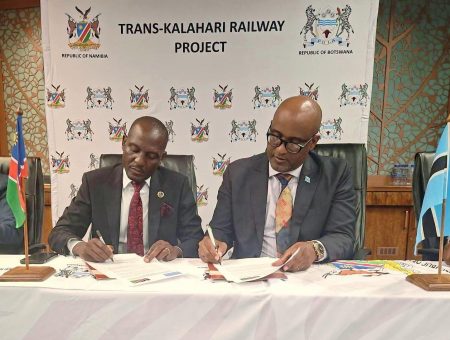
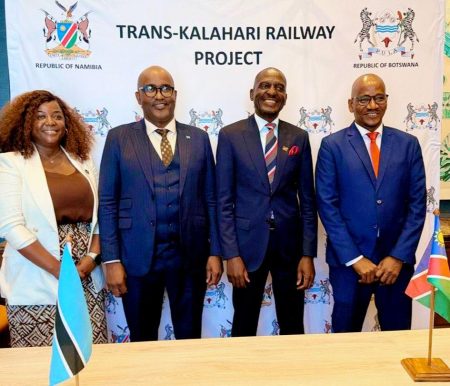
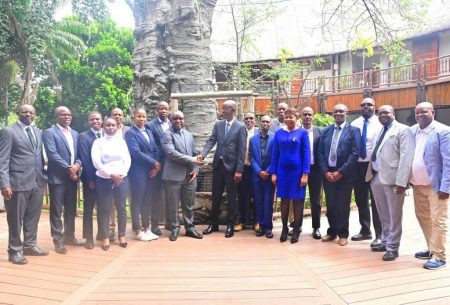
During the recent National Transport Conference, our Editor, Phillippa Dean, moderated the SADC Ministerial panel discussion on “Leadership and Governance for Transport as an Anchor for Inclusive Growth in Southern Africa.”
Transport is far more than infrastructure. Roads, railways, ports and airports connect economies, link communities to opportunity, and enable countries to participate meaningfully in regional and global trade.
Across Southern Africa, effective transport networks are central to economic development. They reduce the cost of doing business, support trade corridors, unlock rural and resource regions, and enable broader participation in economic activity.
This is not new.
Yet discussions continue to focus on how infrastructure can connect more effectively, lower the cost of doing business, strengthen competitiveness, and attract investment, often framed around private sector participation and PPPs. Implementation, however, remains slow.
Leadership provides the vision through policy, planning, and the enabling environment, while governance ensures that investments are transparent, coordinated, and aligned with long-term national and regional priorities.
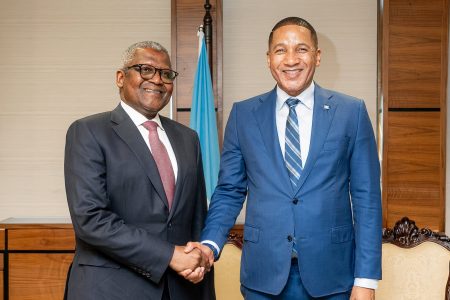
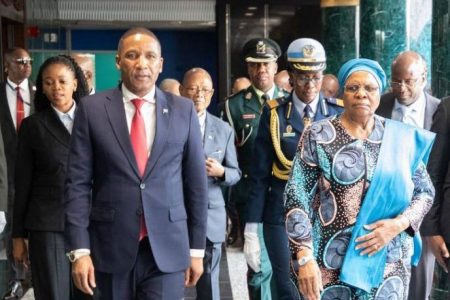
Botswana, represented by Assistant Minister of Transport and Infrastructure, Hon. Keoagile Atamelang, highlighted a significant shift in leadership following a change in government after 58 years under a single party. Under the leadership of President Duma Gideon Boko, the country now has one of the youngest parliaments in Africa. This transition has been accompanied by a defined national vision, described as a digitally enabled, export-led, and diversified high-income economy in which every Motswana is employed, empowered, and fulfilled.
A roadmap has been established, with Botswana positioning itself as a logistics hub. This includes the development of regional corridors that benefit not only Botswana but the wider region. Supporting this is the Botswana Economic Transformation Programme (BETP), which functions as a self-assessment tool to support project delivery, implementation, and the identification of bottlenecks and risks.
Botswana’s geographic position at the centre of SADC is not viewed as a constraint but as an advantage. Rather than being landlocked, the country considers itself land-linked. The intention is to develop corridors that enable trade flows across the region, including between Namibia and Mozambique and between South Africa, the Democratic Republic of Congo, Zambia, and other countries. Challenges are therefore approached as opportunities.
In positioning its transport strategy, Botswana aims to ensure that it participates in regional growth. As neighbouring countries expand their transport industries, Botswana intends to integrate into these systems. Key to this is the development of rail infrastructure.
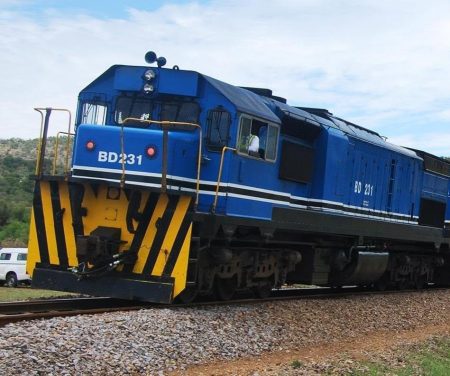
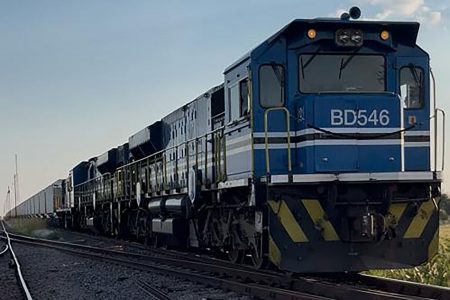
The Trans-Kalahari rail line is intended to link Botswana to Namibia while also enabling access to ports in Mozambique. Botswana recognises that its domestic market is not large enough to consume all goods moving through its territory, but it offers a stable and secure environment for the movement and transit of goods between borders.
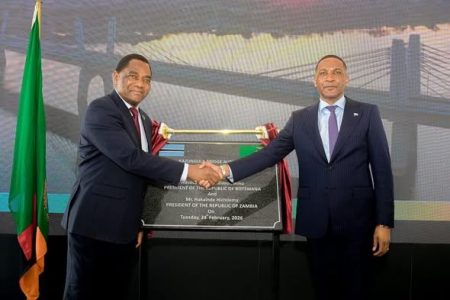
The Mosetse–Kazungula–Livingstone railway line is another priority, linking Botswana with Zambia and forming part of a broader regional connection. The Kazungula Bridge, which crosses the Zambezi River, has already been completed with provision for rail. The next step is to connect South Africa to Zambia through Botswana via rail.
Additional projects include the Mmamabula–Lephalale line, linking Botswana with South Africa, with the intention of advancing agreements to support its development.
To support these ambitions, Botswana is undertaking reforms under the BETP, including roadshows to attract investors and reforms to public-private partnership frameworks and tax legislation. The objective is to create investor-friendly conditions and improve the ease of doing business. Challenges such as power supply, internet connectivity, and internal logistics have been acknowledged, with reforms aimed at addressing these constraints.
Two key barriers to implementation were identified. The first is “analysis paralysis”, where projects remain in prolonged feasibility stages without progressing to implementation. The second is a lack of harmonisation across borders. Delays at border posts, including long processing times for trains and trucks moving between countries, have been highlighted as a major constraint.
Digitalisation is being positioned as a solution to improve efficiency and reduce delays, enabling faster movement of goods across borders. Harmonisation of legislation across neighbouring countries is also seen as critical, as it would make it easier for investors to operate across jurisdictions.
Botswana is also investing in supporting infrastructure, including the expansion of Maun International Airport, described as the busiest in the region by volume, as well as upgrades to road corridors.
Within the context of regional trade under the African Continental Free Trade Area, Botswana’s strategy is focused on strengthening regional integration rather than serving only national export routes. The country has identified 186 projects to support economic growth, including 26 infrastructure projects.
Botswana’s position within the regional network has been identified as a critical link. At present, it is considered a missing connection affecting trade flows between countries such as South Africa, Zambia, and the Democratic Republic of Congo. Completing links such as the Mosetse–Kazungula–Livingstone corridor is expected to enable more efficient regional trade.
In closing, Hon. Keoagile Atamelang emphasised Botswana’s position as an investment destination, highlighting stability, creditworthiness and opportunity within the transport sector. Rail corridors, in particular, are expected to be transformative, with a focus not only on infrastructure development but also on broader economic impact and improving livelihoods.