Senegal Advances Railway Revival to Drive Economic Growth and Territorial Development

Why it Matters

  • Dakar–Tambacounda metre-gauge rehabilitation
  • Dakar–Tambacounda standard gauge line
  • TER extension to Thiès
  • Touba–Mbacké–Ngabou passenger service
  • ~2,000 km national railway development programme
  • Tambacounda rail logistics platform
  • Railway station rehabilitation programme
Senegal Advances Railway Revival to Drive Economic Growth and Territorial Development

Senegal has placed the revitalisation of its railway network at the centre of its long-term economic and territorial development strategy, aligning the sector with the National Transformation Agenda, Senegal Vision 2050.

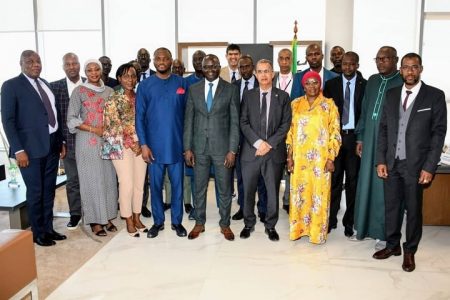
The Government’s decision to position rail as a key driver of sustainable development is being advanced by the Minister of Land and Air Transport, Yankoba Dieme, whose direction for the railway sector reflects the State’s broader strategic priorities.

Senegal’s significant mineral resource base, including basalt, phosphate, iron, bauxite, manganese, and zirconium, presents strong potential for sustained and inclusive economic growth. However, much of this potential remains underexploited due to limitations in the existing railway network, with Thiès phosphate remaining one of the few resources currently supported by rail infrastructure.

In response, the Government is pursuing a renewed vision for railway development aimed at strengthening connectivity across the national territory and supporting the growth of territorial economic hubs. This approach is intended to provide a more effective framework for the exploitation and movement of mineral and energy resources while improving overall logistics efficiency.

The railway revival programme is positioned as a strategic lever for attracting investment, with transport mobility and rail logistics recognised as critical considerations for investors. The Government’s approach reflects the experience of developed economies, where railway systems have historically underpinned industrial expansion and regional integration.

As part of this strategy, Senegal has prioritised the interconnection of territorial hubs through rail, with the objective of unlocking the country’s economic potential and improving internal and regional connectivity.

In alignment with Senegal Vision 2050, the Ministry of Land and Air Transport has committed to the development of approximately 2,000 kilometres of railway lines. This includes both the construction of new infrastructure and the rehabilitation of existing networks, notably the metre-gauge Dakar–Tambacounda line, aimed at restoring traffic on traditional routes.

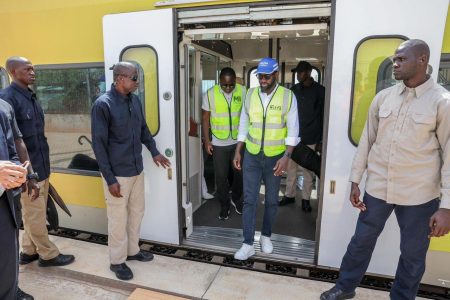
Passenger rail services are already contributing to improved mobility. The Touba–Mbacké–Ngabou (TMN) train, currently in operation, is facilitating the movement of students and populations within one of the country’s most densely populated areas.

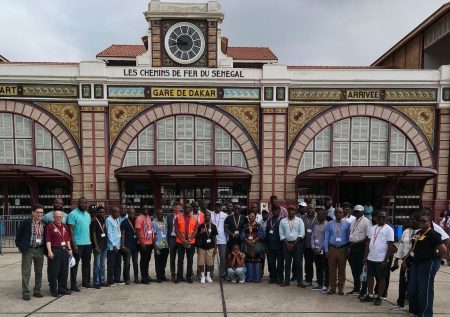
On the freight side, rehabilitation efforts have focused on improving track conditions, developing a logistics platform in Tambacounda, and upgrading station infrastructure. During a recent economic tour to Tambacounda, the President of the Republic directed that substantial support be provided to the Société des Chemins de Fer du Sénégal (CFS) to ensure the completion of works and the rapid resumption of rail traffic.

Senegal is also advancing plans to develop a standard gauge railway network in line with international best practice, with the objective of strengthening the competitiveness of its rail logistics, increasing freight volumes, and improving passenger services.

Key projects include the Dakar–Tambacounda standard gauge line and the extension of the Regional Express Train (TER) towards Thiès. These developments are expected to reduce pressure on the road network, lower maintenance costs, and significantly reduce road accidents, currently estimated at 850 fatalities per year.

The Dakar–Tambacounda corridor is designed to connect the ports of Dakar, Bargny, and Ndayane, positioning Senegal more competitively within the regional port landscape alongside Tangier, Abidjan, Lomé, and Tema.

With increasing competition among West African ports, the development of efficient rail logistics is seen as essential for enhancing Senegal’s position in the subregional market and enabling it to capitalise on opportunities presented by the African Continental Free Trade Area.

The expansion of rail infrastructure is also closely linked to urbanisation trends and demographic growth. The development of high-capacity rail systems is expected to improve long-distance mobility and support more balanced territorial development.

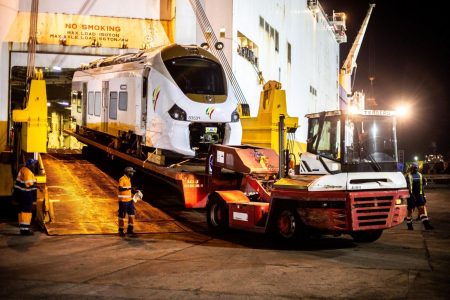
The TER, designed to operate at speeds of up to 160 km per hour, will enhance connectivity between Dakar and the surrounding regions. This will enable greater flexibility in residential and work patterns, allowing populations to live outside the capital while maintaining access to economic opportunities.

At the same time, the improved rail network will facilitate movement towards regional economic hubs, supporting the development of territorial growth poles. These hubs are being reinforced through investments in infrastructure such as agropoles, which are intended to serve as industrial and agricultural platforms driving sustainable development.

Senegal’s railway revival reflects a broader shift towards infrastructure-led development, with rail positioned as a central component of the national transport system. The success of this approach will depend on the effective delivery of planned projects, continued investment, and the integration of rail with ports, logistics platforms, and industrial zones.

As the country advances its Vision 2050 objectives, the railway sector is expected to play an increasingly critical role in supporting economic growth, improving connectivity, and enhancing Senegal’s competitiveness within the West African region.

Related News Articles