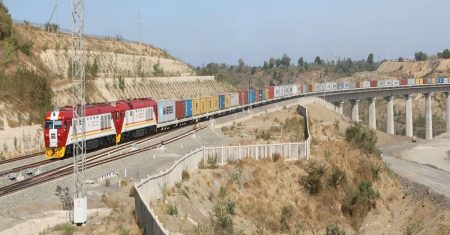
Whilst not a rail project, this is still a significant step in the right direction for corridor development. The African Development Fund is providing decisive financial support to advance the transformative road corridor linking South Sudan, Djibouti and Ethiopia.
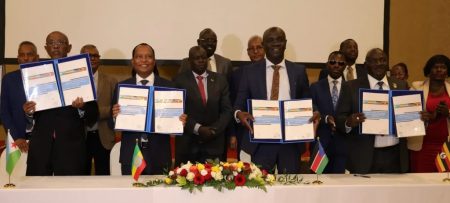
The Board of Directors of the African Development Bank Group has approved $214.47 million in financing to launch the second phase of the South Sudan-Ethiopia-Djibouti Transport Corridor Project.
The package, drawn from the African Development Bank Group’s concessional window, comprises several grants: $181.5 million for Ethiopia, $29.71 million for Djibouti, and $1.96 million for South Sudan, along with an additional $1.30 million for South Sudan from the Bank Group’s Transition Support Facility for countries facing fragility.
Phase II of the project will deliver major infrastructure improvements across the three countries. In Ethiopia, it will involve the construction of a 67-km expressway and deployment of intelligent transport systems. In Djibouti, works will focus on upgrading the 18-km Dikhil-Mouloud section. South Sudan will undertake the update of the studies to upgrade 280 kilometres of the Kapoeta-Boma-Raad road. Additionally, improvement of feeder roads – 50 km in Ethiopia and 15 Km in Djibouti is part of the project scope.
“The transport corridor between South Sudan, Ethiopia and Djibouti is an essential vector for development as it will reduce transport costs, improve connectivity with Djibouti’s ports for land-locked countries, link production areas to regional and continental markets, boost trade flows, facilitate the cross-border movement of goods and people, and strengthen the agricultural and livestock value chains on which most of the communities along the corridor are heavily dependent,” said Mike Salawou, the Bank’s Director for Infrastructure, Cities and Urban Development.
The project also features capacity-building components. Ethiopia will build and equip a new automotive/engineering technical and vocational training centre in the project area. A total of 300 women and youth will receive training in agro-industrial technical skills and in entrepreneurship – including business planning, financial management, marketing, innovation and leadership. In Djibouti, 10 engineers (including five women) will participate in a professional internship scheme. In South Sudan, the project will strengthen the institutional and human resource capacities of the Ministry of Roads and Bridges and the Roads Authority.
It also includes capacity building and training for personnel in the road authority agency in Ethiopia and Djibouti.