Madagascar Multimodal Transport Project to Support Rail, Port, Waterway and Airport Upgrades

Why it Matters

Madagascar’s proposed programme brings rail, ports, inland waterways and regional airports into a single corridor-based transport strategy. For a country where logistics costs, climate exposure and connectivity constraints affect trade competitiveness, the project places infrastructure rehabilitation within a broader multimodal framework rather than treating each mode in isolation.

The inclusion of railway rehabilitation, a dry port and terminal facility, Pangalanes canal improvements, secondary port upgrades and airport modernisation gives the project wider significance for regional mobility, freight flows and domestic market access. Its institutional reform elements also matter, as governance, regulation and operational coordination will influence whether upgraded assets translate into better transport performance.

Madagascar is preparing a multimodal transport and logistics project designed to complement current road projects by financing climate-resilient upgrades and rehabilitation across selected priority infrastructure.

The project is aligned with Madagascar’s 2024-2039 National Transport Plan and aims to improve connectivity across major international and domestic transport corridors. It is intended to contribute to a more efficient business environment, reduce transport costs, increase resilience, and strengthen security and safety compliance at secondary airports.

The programme focuses on three main corridor groupings. The first is the Tananarive-Tamatave corridor, where planned works include railway rehabilitation, the construction of a logistics platform near Antananarivo to manage heavy traffic entering the city, and improvements to infrastructure at Tamatave airport. The second covers the RN4 and RN7 corridors, with the rehabilitation of the ports of Majunga and Tulear, as well as Tulear airport. The third focuses on the Pangalanes canal – RN12 corridor, with the rehabilitation of key sections of the canal and improvements to infrastructure at Fort-Dauphin airport.

A further institutional component is included to support public transport entities, with attention to strengthening oversight and coordination, while streamlining regulatory procedures to promote governance and competition across transport modes.

The project is structured around four components.

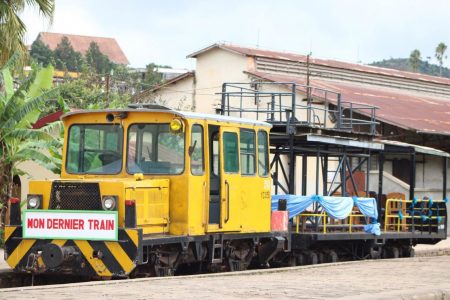
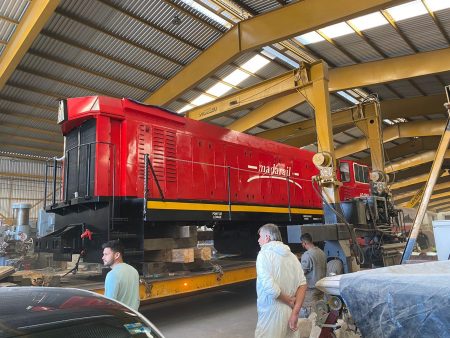
The first component focuses on the modernisation and reform of railway transport. It will finance the rehabilitation and reinforcement of priority sections of the Tananarive-Cote Est and Tananarive-Antsirabe railway lines, alongside the construction of a dry port and terminal facility. It will also provide support to Madarail operations, finance preparatory studies to modernise the Fianarantsoa-Cote Est railway line and restore other railway lines, and support capacity building and reform in the rail transport sector.

The second component covers port rehabilitation, the reopening of waterways, and reform in maritime and river transport. It aims to rehabilitate the secondary ports of Tulear and Majunga to improve climate resilience and operational efficiency. The component also includes rehabilitation of the Pangalanes canal, support for the management and regulation of maritime and river operations, construction or rehabilitation of tertiary and cabotage ports, support to the reform of APMF organisation, and capacity building and implementation support for APMF.

The third component focuses on regional airports and the air transport sector. Planned activities include the rehabilitation and modernisation of Tamatave and Fort-Dauphin airports, the rehabilitation and modernisation of Tulear airport, support to air transport sector reform and preparatory studies, and capacity building and project implementation support to ADEMA.

The fourth component will support project coordination and resettlement.

Taken together, the programme is intended to strengthen Madagascar’s multimodal transport system by linking rail, road, port, waterway and airport infrastructure across key economic corridors. Its emphasis on climate resilience, logistics efficiency and institutional reform places the project within the country’s broader transport modernisation agenda.

Access the disclosable Project Appraisal Document from the World Bank here: https://documents1.worldbank.org/curated/en/099031226084535496/pdf/BOSIB-e1f0bc95-78a6-4944-ae49-c3eb7e30af06.pdf

Other content that may be of interest:

https://documents1.worldbank.o...

Railway Project Information

  • The railway component falls under Component 1: Modernisation and reform of railway transport.
  • The project will finance the rehabilitation and reinforcement of priority sections of the Tananarive – Cote Est (TCE) and Tananarive-Antsirabe (TA) railway lines.
  • The project includes the construction of a dry port and terminal facility.
  • The project includes support to Madarail operations.
  • The project includes preparatory studies to modernise the Fianarantsoa-Côte Est (FCE) railway line.
  • The project also includes preparatory studies to restore other railway lines.
  • The project includes support to capacity building and reform in rail transport.
  • Madarail is named in the Project Agreement as the Project Implementing Entity for Part 1 of the Project.
  • Madarail is responsible for the coordination, fiduciary, environmental and social aspects, monitoring and evaluation, and day-to-day implementation of Part 1.
  • Under Part 1.2, Madarail is required to enter into a performance-based Dry Port Operations Contract to finance complementary facilities, render the new terminal fully operational, ensure service quality, support operational sustainability and enable private sector participation in its management.

Related News Articles

MADAGASCAR JOURNEY

14 February 2012
SADC, Madagascar
1 min

MALAGASY RAILCAR

29 November 2010
SADC, Madagascar
1 min